
Back to Eximietas Software

Digital & Intelligence Engineering · Built for change

Cloud-Native Engineering

Distributed systems designed to take advantage of the cloud, not simply run inside it.

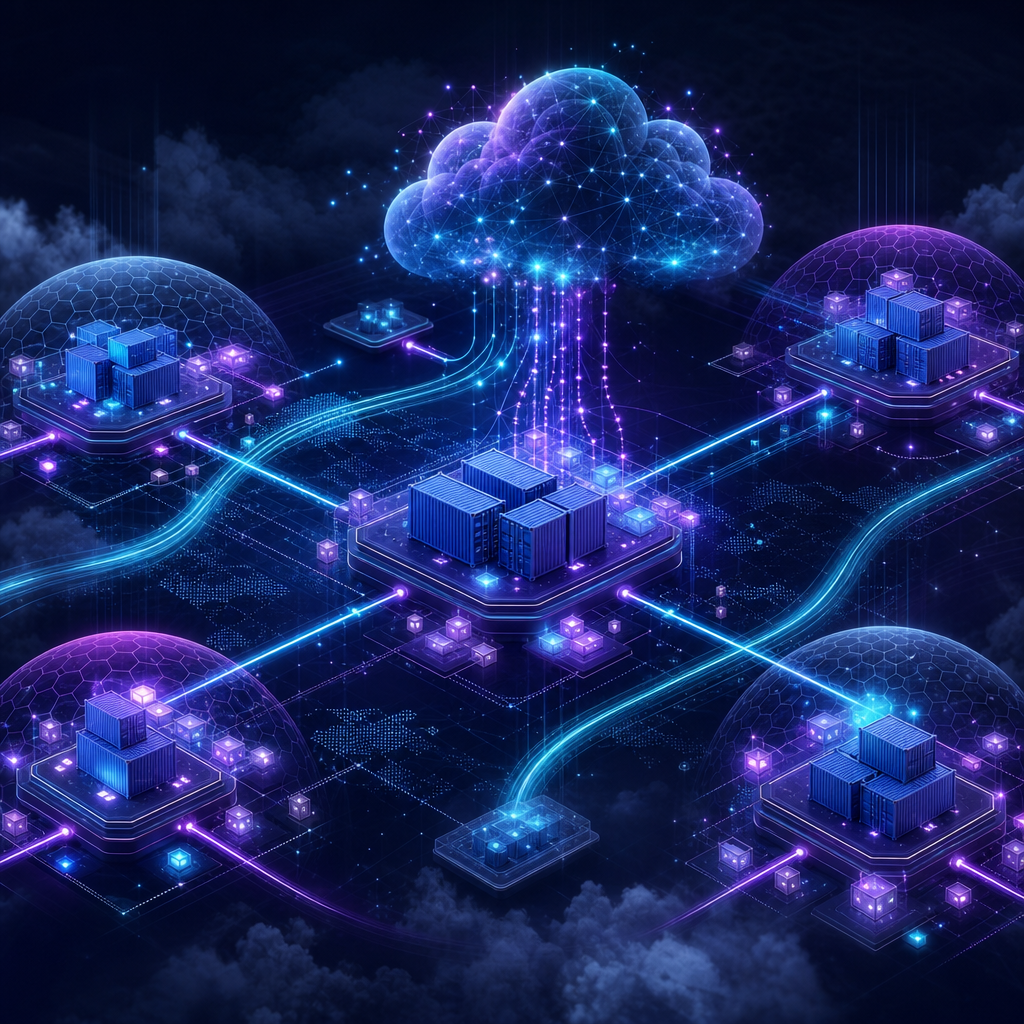
Cloud-native microservices distributed across resilient infrastructure with service-to-service observability
Resilient cloud-native systems

The work

Engineering that holds up beyond the demo.

We apply cloud-native principles where they create real product value: modular services, elastic infrastructure, resilience, and strong developer experience.

What we help you achieve

  • Elasticity where demand and economics justify it
  • Resilient services with explicit failure behavior
  • Faster, safer change across independently owned domains
  • Portable and repeatable runtime foundations
  • Better observability across distributed user journeys

Detailed capabilities

The work behind a dependable platform.

Explore the engineering areas that take this capability from a first technical decision to a stable, production-ready system.

01

Domain-Driven Architecture

Cloud-native design begins by finding boundaries that reflect how the business changes and owns work.

  • Map domains, capabilities, actors, data ownership, workflows, dependencies, and team boundaries
  • Define bounded contexts, service responsibilities, APIs, events, contracts, consistency, and transaction choices
  • Choose microservices, modular monolith, or managed capabilities based on change rate and operational cost
  • Create migration seams and platform standards that avoid distributed complexity without a product reason
02

Containers, Kubernetes & Managed Runtime

Runtime architecture should match workload behavior, operational maturity, and the team’s need for control.

  • Package services with reproducible images, configuration, health checks, resource limits, and security context
  • Design Kubernetes workloads, namespaces, scheduling, autoscaling, networking, storage, upgrades, and policy
  • Use serverless, queues, databases, object storage, event buses, and managed services where they simplify ownership
  • Support workload placement across regions, zones, edge, and hybrid environments with clear failure assumptions
03

API-First & Event-Driven Systems

Stable interfaces let teams evolve services and connect products without coordinating every internal change.

  • Design versioned REST, GraphQL, gRPC, asynchronous, webhook, and event contracts around consumer needs
  • Apply schema evolution, idempotency, ordering, retries, dead-letter handling, backpressure, and replay
  • Build gateways, service discovery, authentication, authorization, quotas, rate limits, and traffic policies
  • Connect operational systems, data platforms, AI inference, retrieval, and workflow actions through explicit contracts
04

Resilience, Security & Observability

Distributed systems need failure behavior and evidence designed in before production traffic arrives.

  • Use timeouts, retries, circuit breakers, bulkheads, graceful degradation, idempotency, and compensating actions
  • Instrument traces, metrics, logs, service dependencies, queues, user journeys, cost, and business transactions
  • Apply DevSecOps with identity, secrets, image and dependency scanning, policy, network controls, and audit
  • Exercise chaos, load, failover, upgrade, restore, and regional failure scenarios against SLOs
05

Platform, Developer Experience & MLOps

Cloud-native architecture scales only when teams can use it consistently and safely.

  • Create paved paths, service templates, infrastructure modules, local environments, CI/CD, and self-service delivery
  • Standardize deployment, configuration, secrets, policy, observability, ownership, and incident workflows
  • Support model training, evaluation, retrieval, batch, streaming, and inference workloads on the same governed platform
  • Measure developer lead time, reliability, utilization, cost, and platform adoption to guide improvements

Technical scope

Engineering detail from reset to runtime.

The work is designed around observable system behavior: what executes first, how resources are controlled, how failures are recovered, and how the platform proves it is ready.

01

Architecture & domains

  • Domain-driven design, bounded contexts, modular monoliths, microservices, service ownership, data ownership, and change boundaries
  • APIs, events, contracts, consistency, transactions, migration seams, dependencies, and distributed-complexity tradeoffs
  • Product, platform, data, AI, and workflow capabilities aligned to teams and operating responsibilities
02

Runtime & orchestration

  • Container images, configuration, health, resource limits, security context, Kubernetes workloads, namespaces, scheduling, and autoscaling
  • Service mesh or gateway patterns, discovery, networking, storage, upgrades, policy, and multi-zone/region placement
  • Serverless, queues, event buses, managed databases, object storage, edge, hybrid, and cloud-provider services
03

Interfaces & resilience

  • REST, GraphQL, gRPC, webhooks, asynchronous events, schema evolution, idempotency, ordering, retries, replay, and dead letters
  • Timeouts, circuit breakers, bulkheads, backpressure, graceful degradation, compensation, and failure isolation
  • Identity, authorization, quotas, rate limits, traffic policy, secrets, network controls, and audit
04

Operations & MLOps

  • Traces, metrics, logs, queues, dependencies, user journeys, cost, business transactions, SLOs, and error budgets
  • Chaos, load, failover, upgrade, restore, and regional failure testing with incident and recovery practice
  • Paved paths for data, training, evaluation, retrieval, batch, streaming, inference, CI/CD, policy, and ownership

Services and customer value

Technical work with a business reason.

Every engineering activity is tied to a decision your team needs to make: bring up faster, reduce risk, improve determinism, or prove production readiness.

01

Cloud-native architecture and domain design

Technical work

Map business capabilities, bounded contexts, ownership, data, dependencies, change rates, and platform constraints into a pragmatic target architecture.

Customer benefit

The product gets the right level of distribution and elasticity without paying for microservices complexity where it adds no value.

02

Microservices and container platforms

Technical work

Build service boundaries, container images, Kubernetes workloads, resource policies, networking, storage, upgrades, autoscaling, and managed-runtime integrations.

Customer benefit

Teams can scale and release parts of the product independently with repeatable runtime behavior.

03

API-first and event-driven integration

Technical work

Define versioned API and event contracts with gateways, identity, quotas, idempotency, retries, ordering, dead letters, replay, and schema evolution.

Customer benefit

Systems connect through stable interfaces, reducing coordination cost and making future product and AI integrations easier.

04

Resilience and distributed observability

Technical work

Implement timeouts, circuit breakers, graceful degradation, traces, metrics, logs, SLOs, chaos/load/failover tests, and incident workflows.

Customer benefit

Teams find and recover from distributed failures before customers experience a long, confusing outage.

05

Cloud-native platform and MLOps enablement

Technical work

Create paved paths, templates, infrastructure modules, CI/CD, policy, secrets, monitoring, and governed runtime patterns for application and AI workloads.

Customer benefit

Developers can use cloud-native capabilities consistently, while platform teams retain visibility into security, reliability, and cost.

Why this matters for AI

Intelligence needs a dependable execution layer.

Cloud-native patterns give AI systems the elasticity, isolation, event connectivity, observability, and deployment repeatability they need. We apply them pragmatically—using microservices, containers, APIs, serverless, managed services, and MLOps where they improve the product rather than adding architecture for its own sake.

What you take forward

Clear outputs your team can build on.

  • Domain and architecture assessment with bounded contexts, service/module choices, ownership, dependencies, target state, and migration seams
  • Container and runtime package with images, Kubernetes or managed-service configuration, resource policies, networking, storage, autoscaling, and upgrades
  • API and event contract package with schemas, versioning, gateway, identity, quotas, retries, idempotency, replay, and dead-letter handling
  • Resilience and observability package with failure policies, traces, metrics, logs, SLOs, dashboards, chaos/load tests, and incident runbooks
  • Cloud-native delivery platform with templates, infrastructure modules, CI/CD, policy, secrets, environments, ownership, and self-service paths
  • AI/MLOps integration handoff with data, retrieval, training, evaluation, batch, streaming, inference, cost, and governance patterns

Capability map

Built across the layers.

The right answer is usually a connected system of decisions, not a single isolated skill.

01

Domain-driven microservices architecture

02

Containers, Kubernetes, and orchestration

03

API-first and event-driven integration

04

Serverless and managed cloud services

05

Resilience, security, and distributed observability

06

Cloud-agnostic platform and MLOps patterns

Keep exploring

See how the pieces connect.